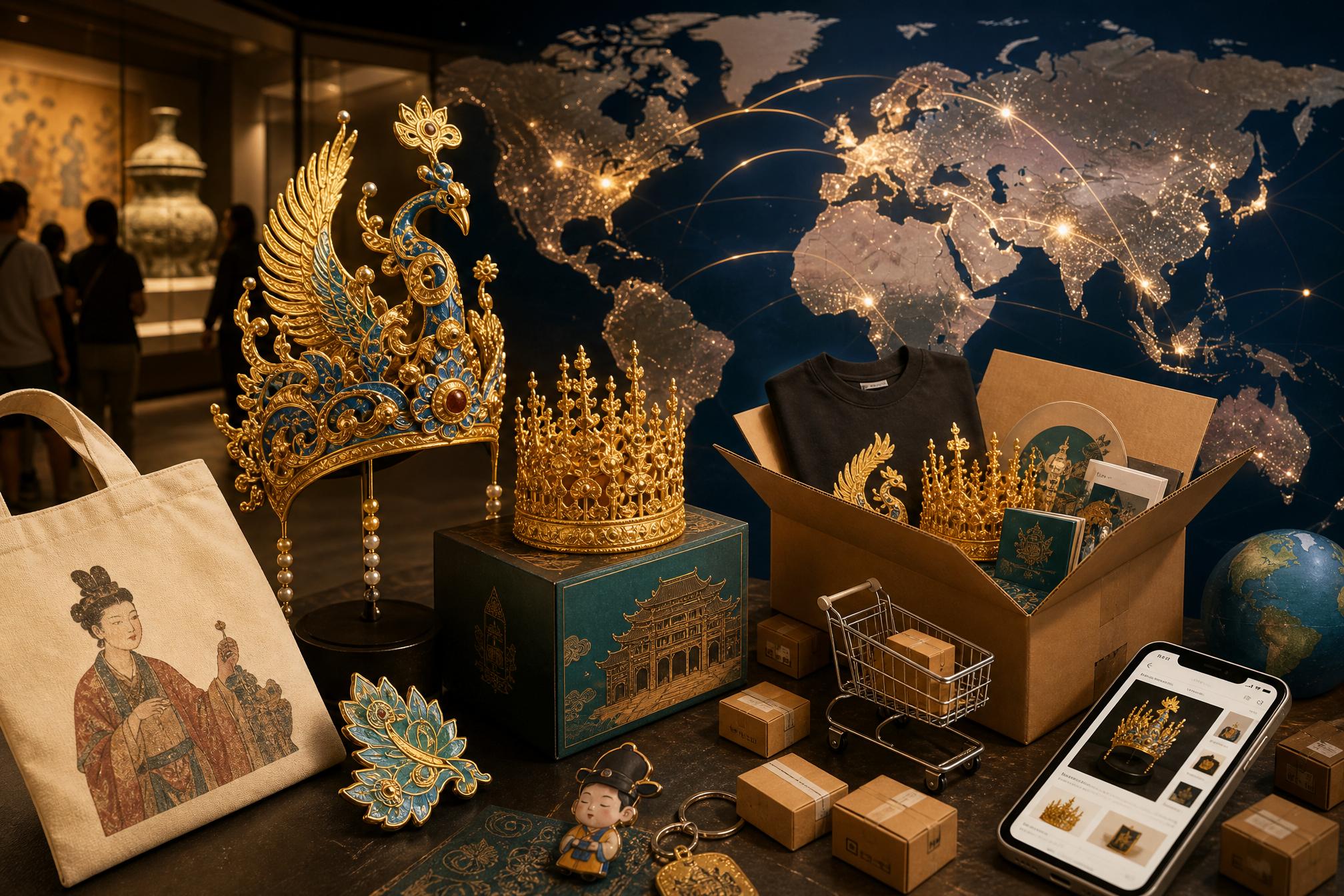
Museum merchandise has quietly become one of the most unexpected success stories of the past few years.
A fridge magnet shaped like a phoenix crown sells millions. A miniature gold crown from an ancient dynasty becomes a global bestseller. A museum-branded T-shirt sells out within weeks of launch.
Something is shifting. And for museums that haven't figured out how to sell beyond their gift shops, the window is closing fast.
The Numbers Don't Lie
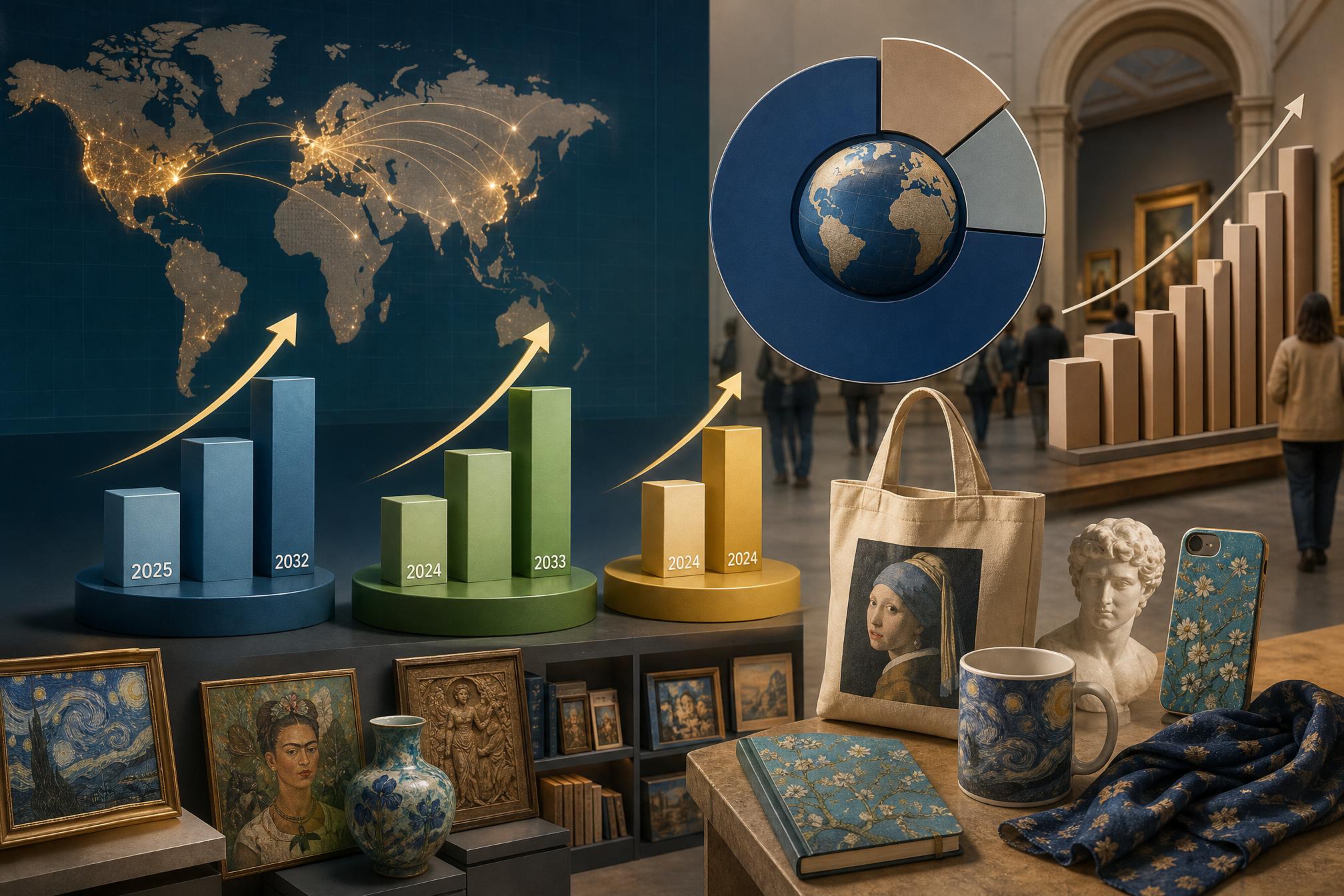
The global museum market was valued at $9.14 billion in 2025 and is projected to reach $20.83 billion by 2032 — a compound annual growth rate of 12.5%. The museum retail sector alone, which includes merchandise sales, was valued at $4.2 billion in 2024 and is forecast to hit $7.6 billion by 2033.
Global retail sales of licensed merchandise for art properties reached $3.95 billion in 2024. And overall, global brand licensing sales grew 3.7% in 2024 — significantly outpacing the 3.1% growth of global retail as a whole.
Here's what that means: Consumers, even when watching their budgets, are willing to pay for products with emotional and cultural value. And museums, with their deep archives of visual culture, are sitting on one of the most undervalued IP assets in the world.
Who's Already Winning
The British Museum: 20 Million Online Visitors
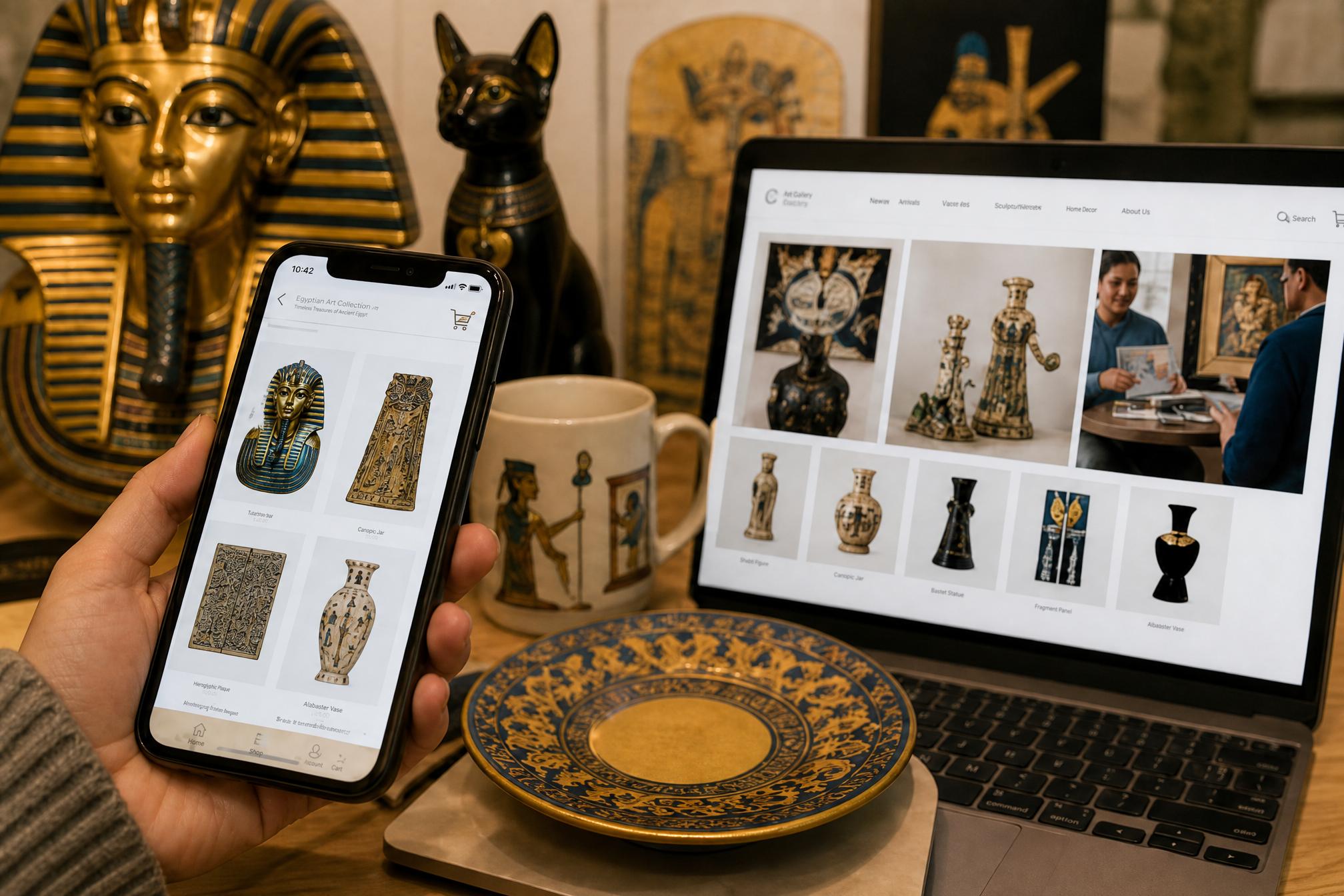
The British Museum's Tmall e-commerce store receives 20 million visitors per year — four times the number that walk through its physical doors. The museum has sold over $15 million worth of goods online through its Chinese storefront. Its licensing program spans homeware, fashion, stationery, collectables, and even digital products, with themes like Ancient Egypt, Art Deco, and Chinoiserie driving consistent demand.
The Metropolitan Museum of Art: From $10 Socks to $144,000 Tables
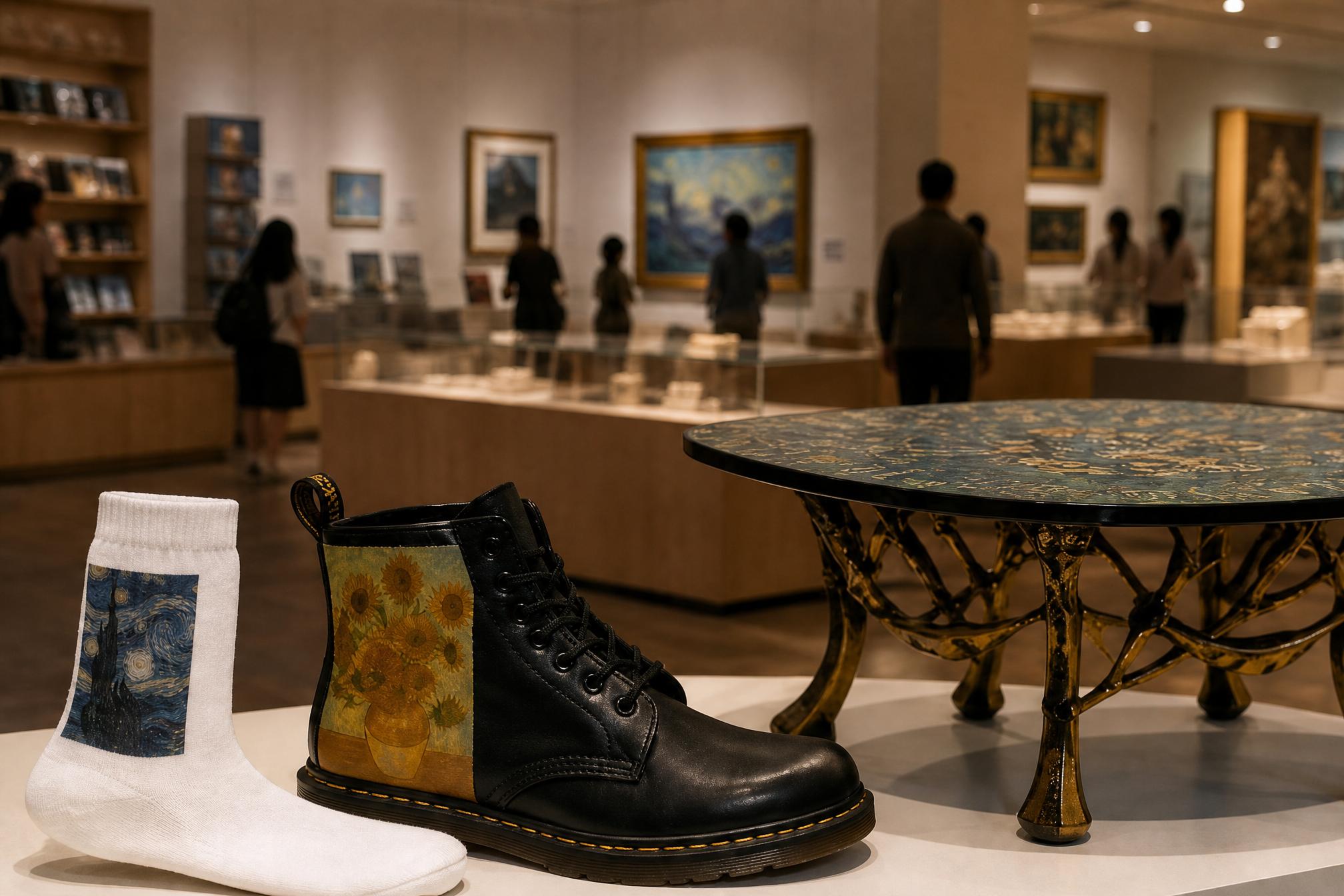
The Met's licensing program now spans everything from $10 PacSun socks to a $144,200 table by luxury furniture maker Abner Henry. In 2022 alone, the Met reported $24.6 million in licensing sales — nearly double what it reported in fiscal 2021. The museum has licensing deals with Dr. Martens, PacSun, and other global brands, all using imagery from its vast collection.
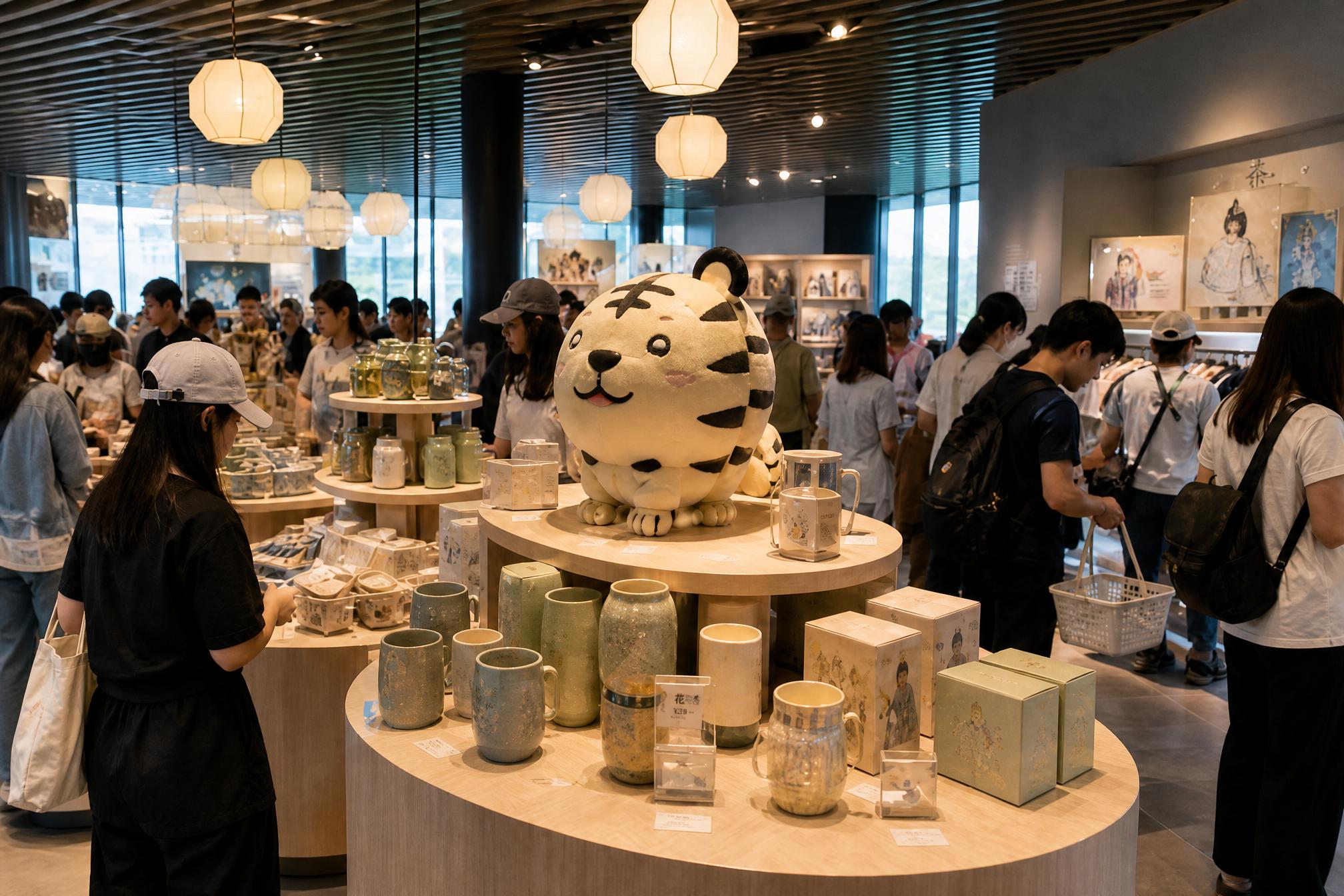
South Korea's MU:DS: $30 Million and Counting
The National Museum of Korea's official merchandise brand MU:DS surpassed $30 million in annual sales in 2025, driven by surging global interest in Korean traditional culture. Monthly revenues more than doubled from around $1.5 million to over $4 million after the release of a popular animated film. The brand's success has been so explosive that visitors now rush in as soon as the museum doors open to buy popular items.
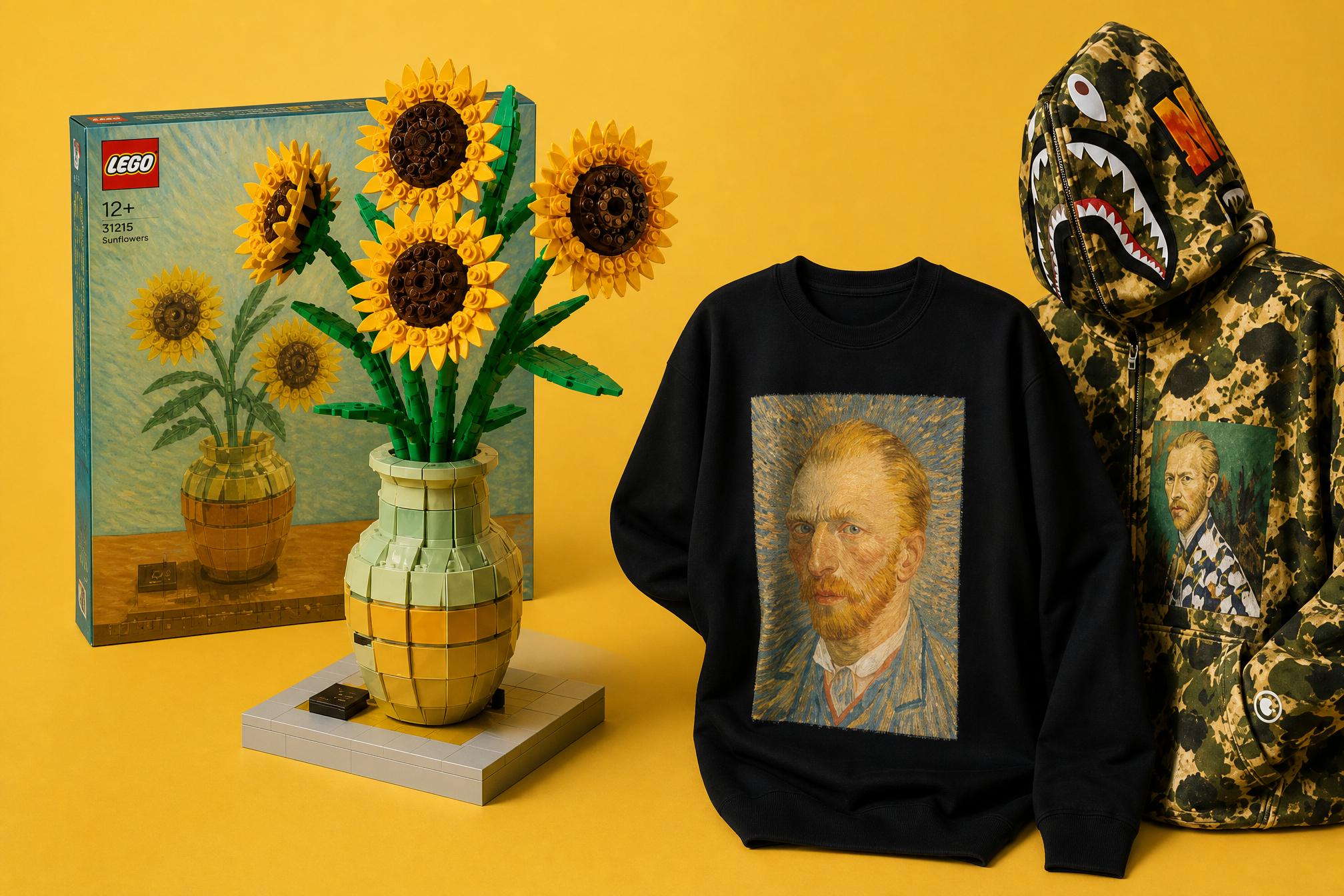
The Van Gogh Museum: LEGO and Streetwear
The Van Gogh Museum in Amsterdam has taken its licensing approach beyond traditional reproductions, collaborating with The LEGO Group on a "Sunflowers" set and with BAPE on a streetwear apparel line. Heritage brands and museums are increasingly "taking the artwork outside of its hallowed halls and bringing it to merch".
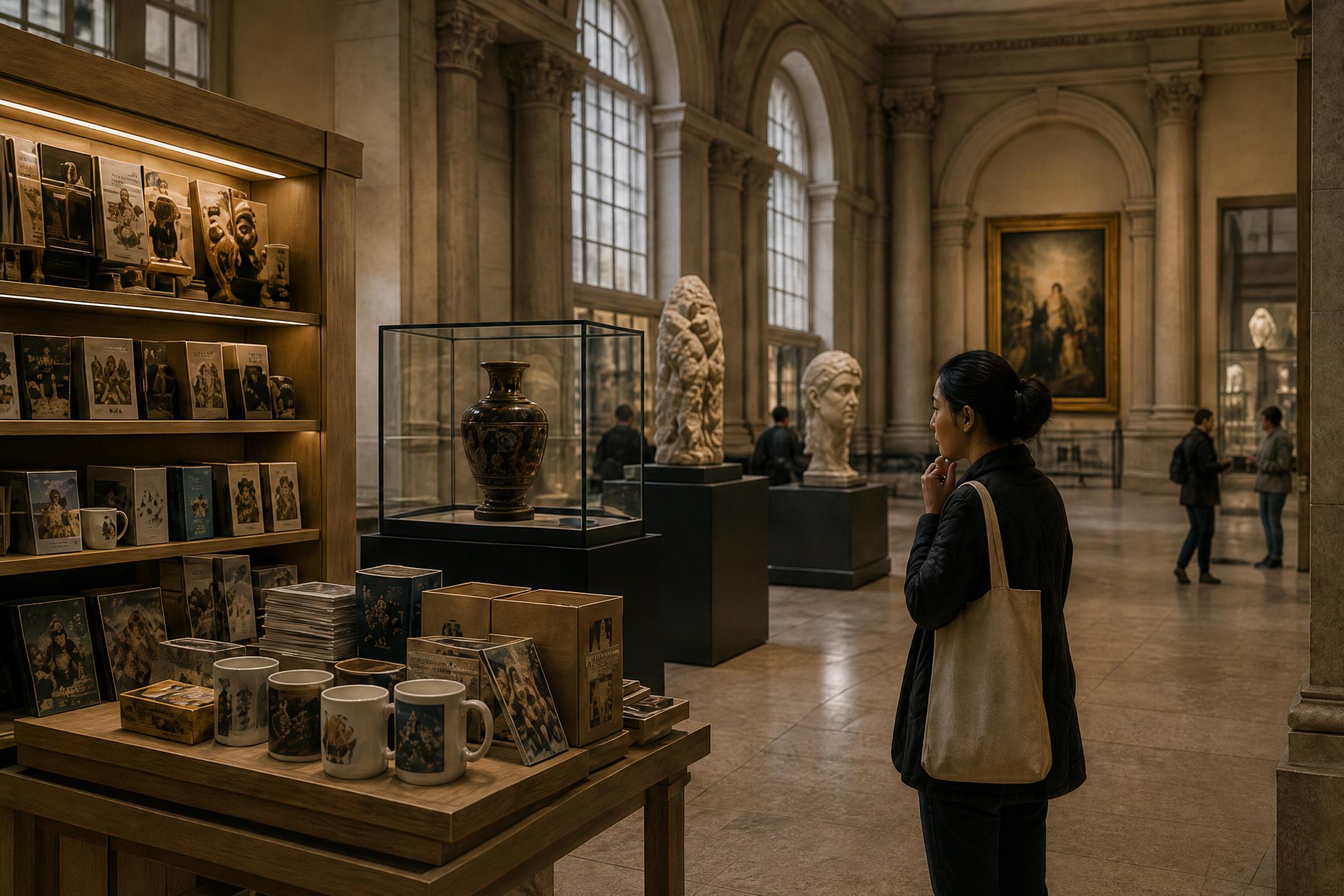
The Problem: Most Museums Are Still Stuck
For every British Museum or Met, there are thousands of museums — many with equally compelling collections — that are still struggling to sell beyond their gift shop counters.
Here's why:
- Licensing is complex. Setting up licensing deals requires legal teams, negotiations, brand partnerships, and years of relationship-building. The Met worked with a licensing firm for four years to shape its strategy. Most museums don't have that kind of bandwidth.
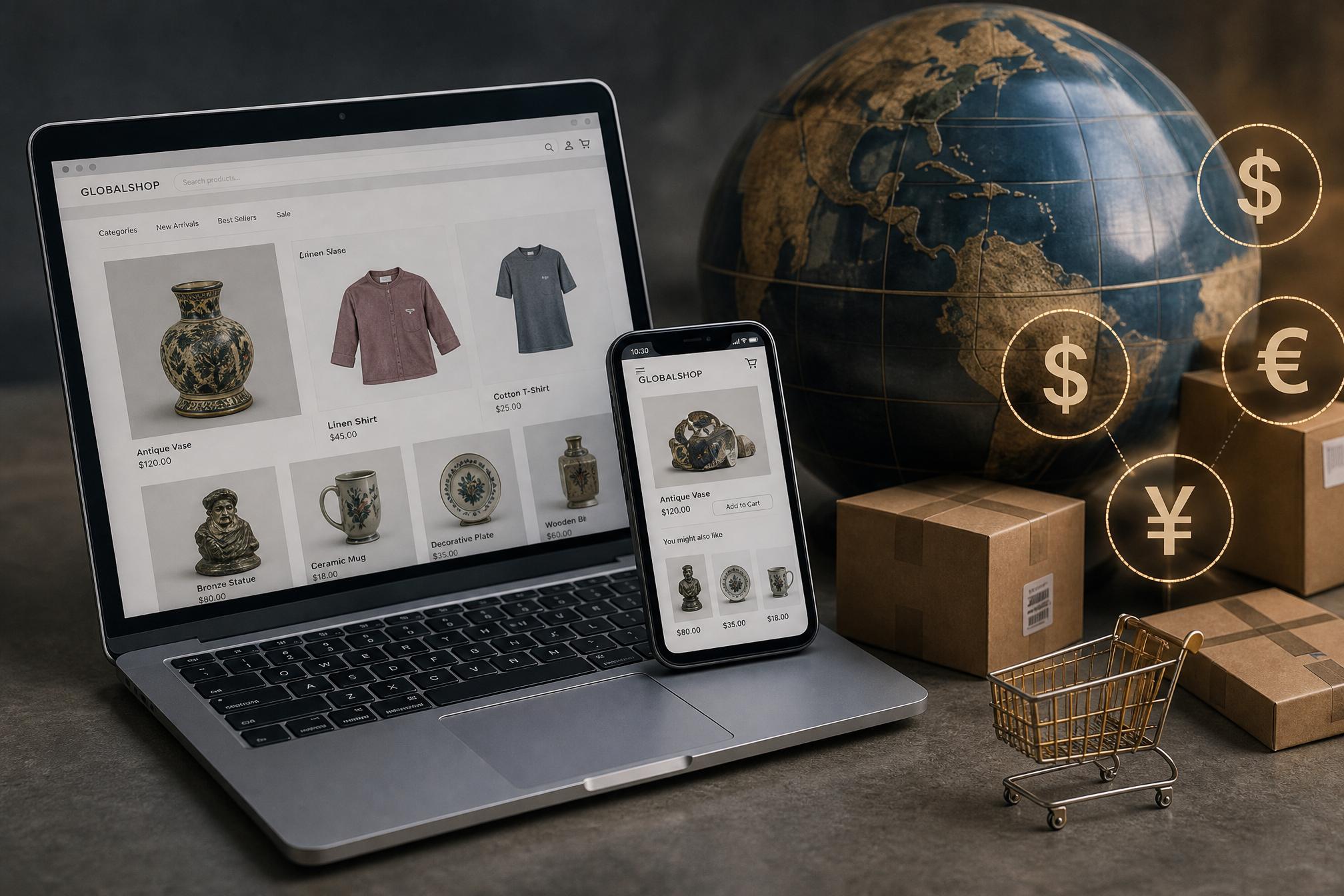
- E-commerce is hard. Building an online store that reaches global audiences means dealing with multiple platforms, different languages, currency conversions, cross-border shipping, and localized marketing. The British Museum's success on Tmall came through a partnership with Alibaba — not something every museum can replicate.
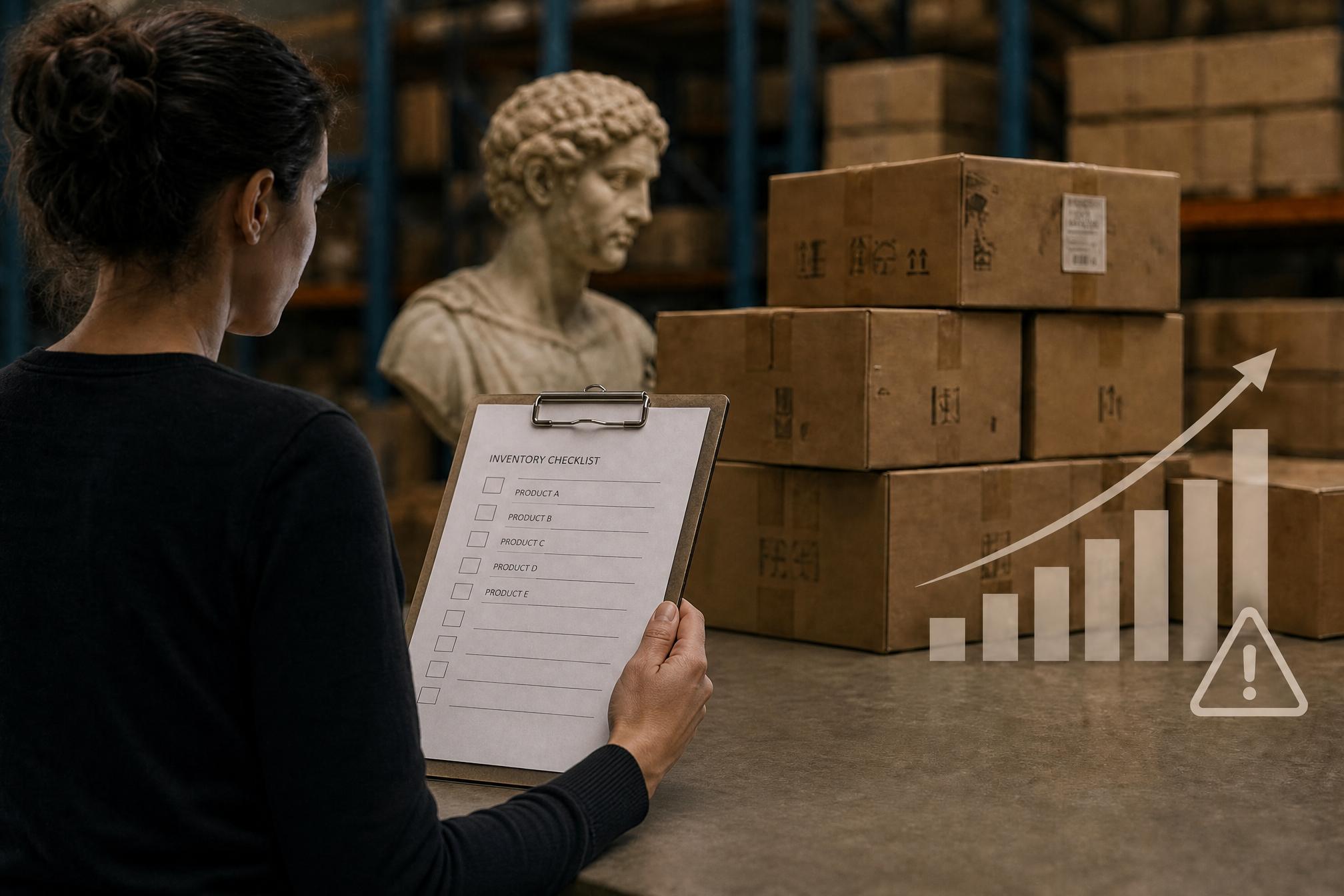
- Production is expensive. Minimum order quantities, inventory management, warehousing, and unsold stock are real risks. Many museums simply can't afford to gamble on large production runs.
- Digital transformation is slow. While museums are "effective communicators" in person, translating that storytelling skill into digital products and global e-commerce is a different challenge entirely.
The result? Most of the world's cultural heritage stays locked inside museum walls, never reaching the people who would treasure it.
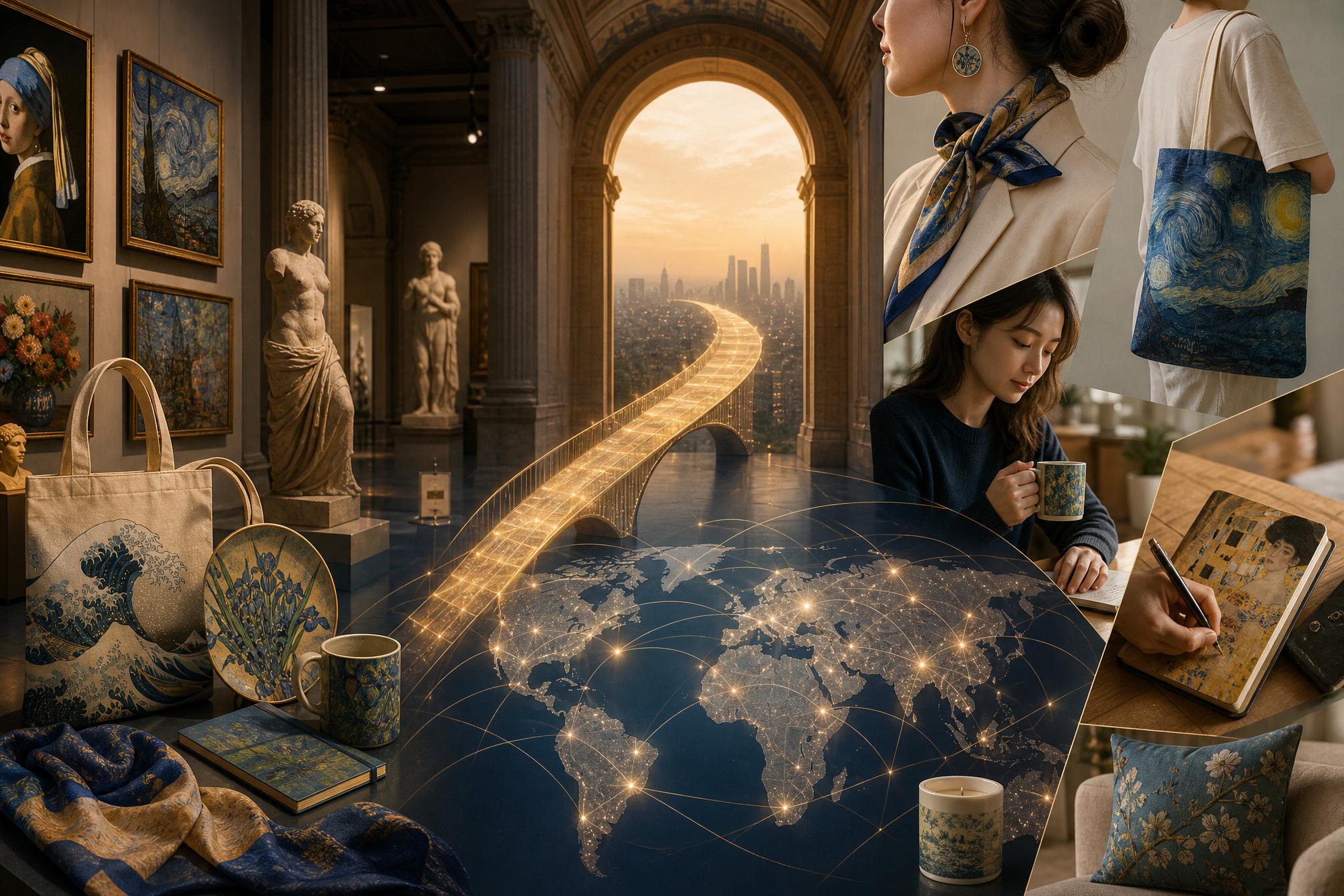
What Genki Does: Turning Museum IP Into Global Products — Instantly
Genki is building the infrastructure that makes museum IP global — without the legal headaches, production costs, or e-commerce complexity.
Here's how it works:
- You upload a digital image — a high-resolution photo of a painting, a scanned illustration, a pattern from a textile, a 3D model of an artifact.
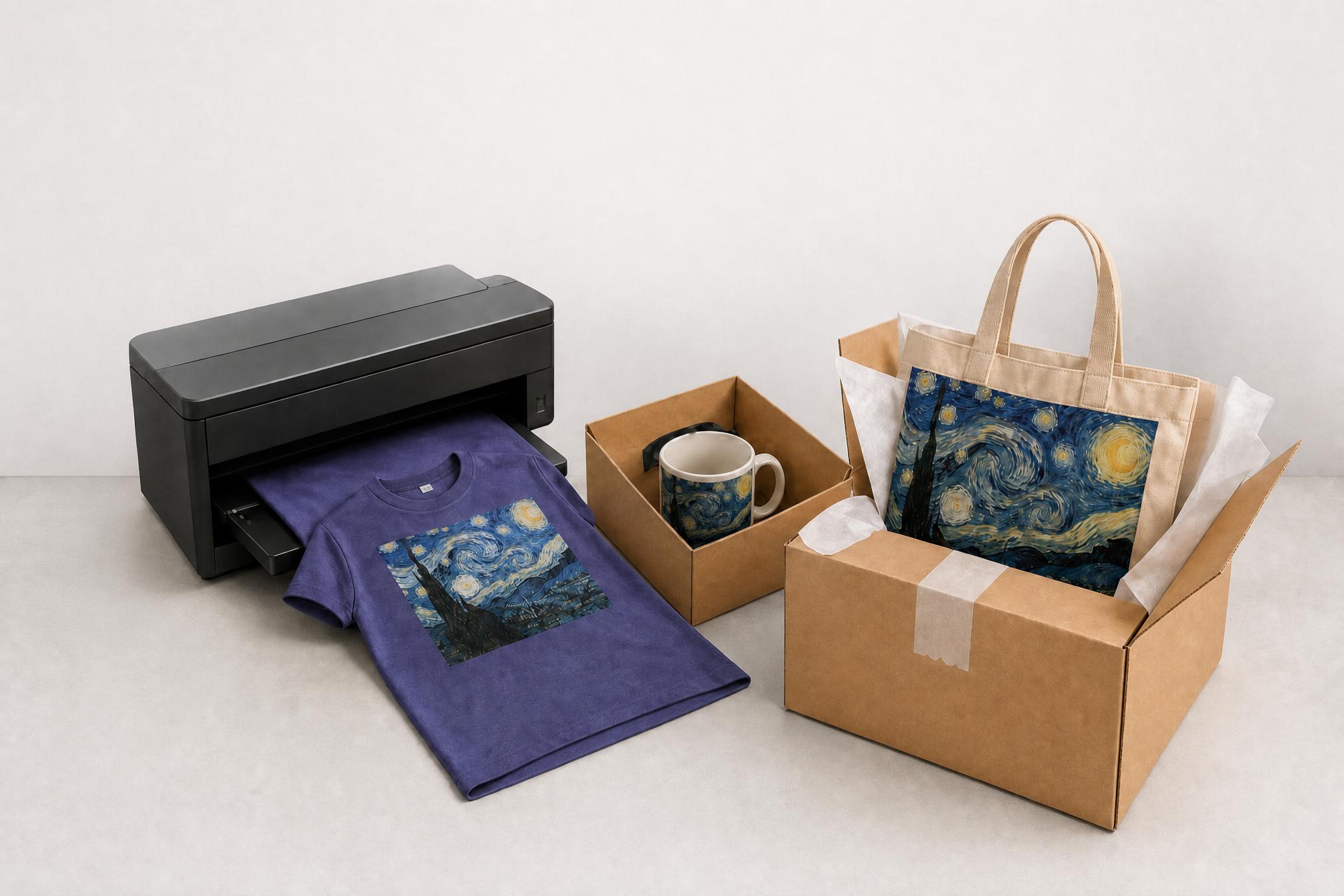
- AI generates products automatically — within seconds, that image appears on T-shirts, phone cases, tote bags, mugs, posters, and dozens of other product types, complete with professional mockups.
- AI writes the copy — product descriptions are automatically generated in multiple languages, tailored to different markets.
- One-click global publishing — your products go live on Etsy, Shopify, Amazon, and other platforms simultaneously.
- Full-service fulfillment — when orders come in from anywhere in the world, Genki handles production, packaging, and cross-border shipping.
- IP protection built in — your collection stays yours. Genki doesn't claim ownership of your IP.
The entire process takes under 15 minutes.
No minimum order quantities. No inventory. No logistics. No legal teams. No e-commerce specialists.
Just your collection, reaching the world.
What This Means for Museums
For a small regional museum with a stunning collection but no e-commerce team, Genki is the difference between "seen by 50,000 visitors a year" and "seen by millions of online shoppers around the world."
For a major institution looking to expand its licensing program, Genki offers a way to test new product categories and markets without committing to large production runs or complex partnerships.
For cultural heritage sites, historic houses, and archives, Genki provides a path to monetize their collections without building infrastructure from scratch.
The global museum retail market is growing at 6.7% annually and is expected to reach $7.6 billion by 2033. The attraction souvenir retail market — which includes museum merchandise — is projected to grow from $25.9 billion in 2025 to $46.8 billion by 2035.
That's billions of dollars in demand for cultural products. And most museums are barely scratching the surface.
A Thought Experiment: If Your Museum Could Go Global in 15 Minutes
Imagine this:
A curator at a small history museum uploads a high-res image of a 19th-century botanical illustration from the archive.
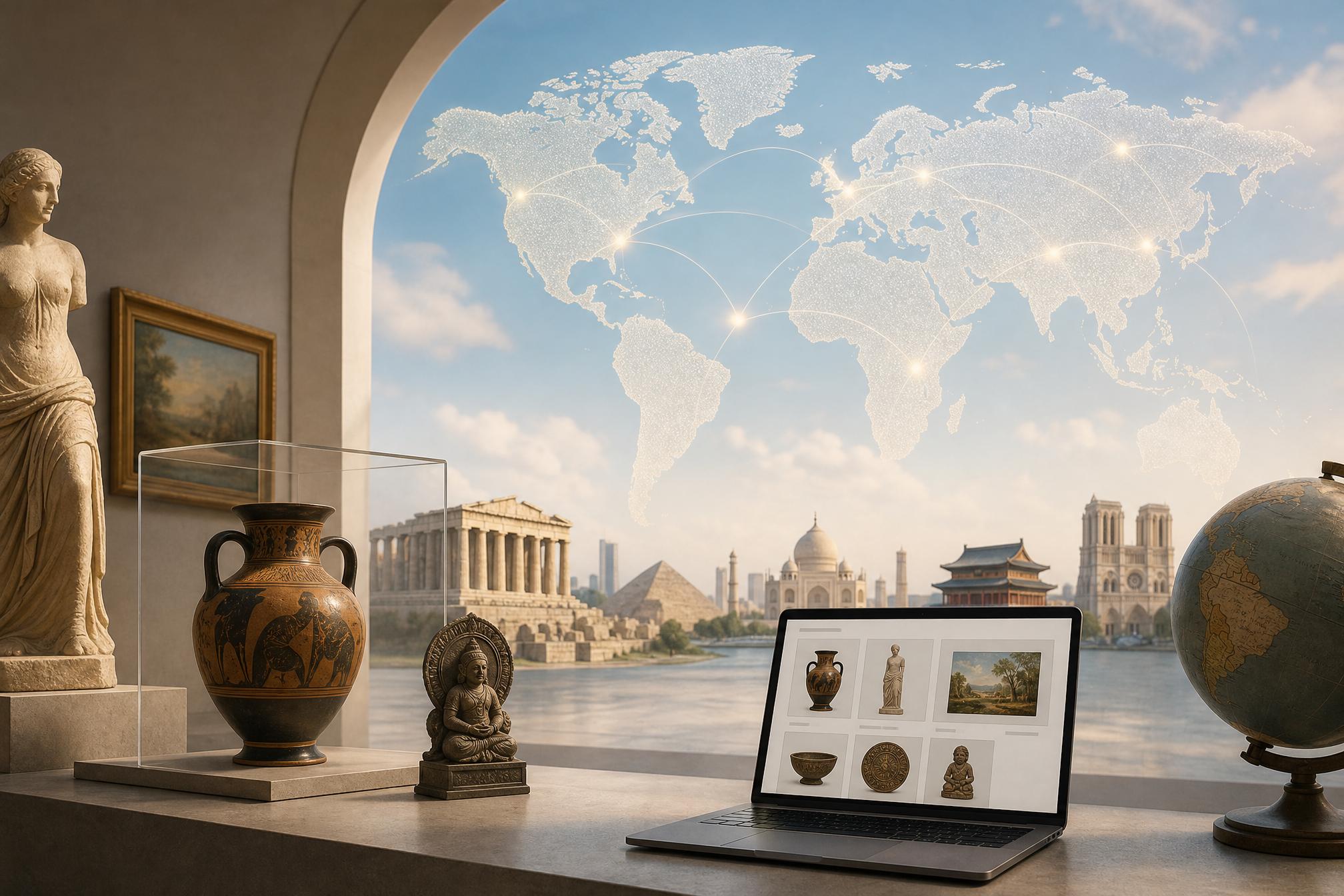
Within minutes, AI generates T-shirts, phone cases, tote bags, and mugs featuring that illustration — with product descriptions in English, Japanese, German, and Spanish.
Those products go live on Etsy, Shopify, and Amazon simultaneously.
A customer in Tokyo buys a tote bag. A customer in Berlin buys a phone case. A customer in Sydney buys a T-shirt.
Three days later, all three orders are printed, packed, and shipped — automatically.
The museum never touched a single piece of inventory. Never wrote a product description. Never packed a box. Never negotiated a licensing deal.
And a 19th-century botanical illustration that had been sitting in a drawer is now being carried through the streets of Tokyo, Berlin, and Sydney.
The Future of Museum Merchandise
The trend is clear: cultural products are no longer just souvenirs. They're statements.
Consumers want to carry a piece of history. They want to wear art. They want to surround themselves with objects that tell a story.
And museums — with their unparalleled archives of visual culture — are perfectly positioned to meet that demand.
But only if they can get their collections out of the gift shop and into the global marketplace.
Genki is the bridge.
Start your museum's global journey at genkios.com
Your collection. Your heritage. The world.
FAQ
Q: Does Genki claim ownership of my museum's IP or collection images?
A: No. Genki does not claim any ownership of your IP or collection assets. You retain full copyright and ownership of your digital assets. Genki provides the infrastructure for production, global listing, and fulfillment—the IP remains yours, and you always have the ability to remove your assets from the platform.
Q: What's the cost to get started? Does Genki require a monthly subscription or minimum commitment?
A: No upfront costs. Genki operates on a pay-as-you-earn model—the platform only takes a percentage from orders you actually sell. If nothing sells, you pay nothing. No monthly fees, no minimum orders, no setup charges. You can start with zero financial risk.
Q: My museum isn't comfortable selling through third-party platforms like Etsy or Amazon. Can we sell solely through Genki's own storefront?
A: Yes. Genki provides a branded storefront option that allows you to sell directly without listing on third-party marketplaces. This gives you full control over your brand presentation and customer relationships, while still leveraging Genki's fulfillment and logistics infrastructure.
Q: What if my museum has an exclusive licensing deal with a partner? Can we still use Genki?
A: Possibly—but you'll need to review your existing agreements carefully. Genki can support projects that don't conflict with exclusive categories or territories. For example, if your licensing agreement covers apparel but not home goods, you could use Genki for mugs and prints. We recommend consulting your legal team to identify non-conflicting product categories and markets. Genki's platform can also be configured to restrict specific product types or regions to avoid overlaps.
Q: Does Genki work with 3D artifacts and non-flat images, or only 2D artworks?
A: Currently, Genki is optimized for 2D images—paintings, illustrations, patterns, textiles, and similar flat artwork. For 3D artifacts, it depends on your images. If you have high-quality 2D photographs of a sculpture or artifact (front view, side view, detail shots), those can be used as designs on products, similar to how the British Museum uses photography of its 3D collection on merchandise. Dedicated 3D model to product features are not yet available but are on Genki's long-term roadmap.
Q: How do you handle quality control? Will products look cheap or misprinted?
A: Genki works with established print partners who use commercial-grade equipment and materials. Before committing to large-scale production, you can order sample products to verify quality. The platform also provides digital mockups so you can preview exactly how your artwork will appear on each product before publishing.
Q: Can we start small—test just a few products and markets—before expanding?
A: Absolutely. There are no minimum order quantities. You can launch a single product in a single market to test demand, then expand based on what sells. This test-and-learn approach is exactly how many museums are using Genki to validate market interest before scaling.
Q: What about unsold inventory? Do we need to store products locally?
A: No. Genki uses a print-on-demand (POD) model—products are manufactured only after a customer places an order. There's no pre-production, no warehousing, and no unsold stock. Your collection items remain digital assets until a sale is made.
Q: How much revenue can my museum expect from Genki?
A: Results vary widely based on your collection's appeal, product selection, pricing strategy, and marketing efforts. Some museums generate consistent monthly revenue; others use Genki for limited-edition drops or seasonal campaigns. The key advantage is zero financial risk—you only earn, you never lose.
Q: How long does it take to go from upload to having products live on global platforms?
A: Typically under 15 minutes. This includes AI generation of product mockups, localized copywriting, and cross-platform publishing. The speed allows museums to respond quickly to trends, anniversaries, or viral moments.
Q: What if a customer in Japan receives a damaged product?
A: Genki handles customer service and replacements for quality issues through its fulfillment partners. You don't need to manage returns or exchanges. The platform's infrastructure ensures buyers receive quality products, protecting your museum's reputation.
Q: How does Genki handle copyright or cultural sensitivity concerns? What if an artwork shouldn't be commercialized?
A: Genki provides the infrastructure—you control what you upload. It's your responsibility to assess which pieces are appropriate for commercialization, particularly for culturally sensitive materials or works with unclear copyright status. For works still under copyright, you must secure clearance before uploading. Genki does not vet content for cultural sensitivity; we recommend consulting with your curatorial team before commercializing any collection items. Once uploaded, you can also remove any product at any time.
Q: Can we limit sales to specific regions (e.g., only North America and Europe, not Asia) based on our licensing restrictions?
A: Yes. Genki supports geographic targeting, allowing you to restrict product visibility and shipping to specific countries or regions. This is particularly useful if you have existing licensing agreements that limit certain product categories to specific territories, or if you want to test markets incrementally.
Q: Does Genki only support "cultural products," or can museums sell educational products, books, or other merchandise?
A: Genki's current infrastructure is designed for print-on-demand merchandise—apparel, accessories, home goods, stationery, and wall art. For physical books, educational kits, or specialized products that require custom manufacturing, those are not yet supported through the platform. However, Genki can accommodate a wide range of standard POD product categories, which cover the majority of museum gift shop inventory.
Still have questions?
Reach out to Genki's team directly at support@genkios.com. Most museums have found that the best way to understand Genki is to simply try it—upload a single image, see the products it generates, and test the process. There's no cost to explore, and no commitment required.
Start exploring at genkios.com