In ecommerce, customers cannot touch your product, try it on, or see it sitting on a shelf. Your product images have to do much of that communication before a customer ever reads the description. That is why strong visuals are more than decoration—they are part of your sales strategy.
For sellers and brand operators looking for practical ecommerce marketing ideas, improving product visuals is often one of the simplest places to start. The right image can explain a product, create desire, answer a question, or show customers how they might use it. Below are eight product image ideas that can make an ecommerce store more engaging while helping shoppers move closer to a purchase.
1. Lifestyle Product Images
A plain product image tells customers what something looks like. A lifestyle image helps them imagine owning it.
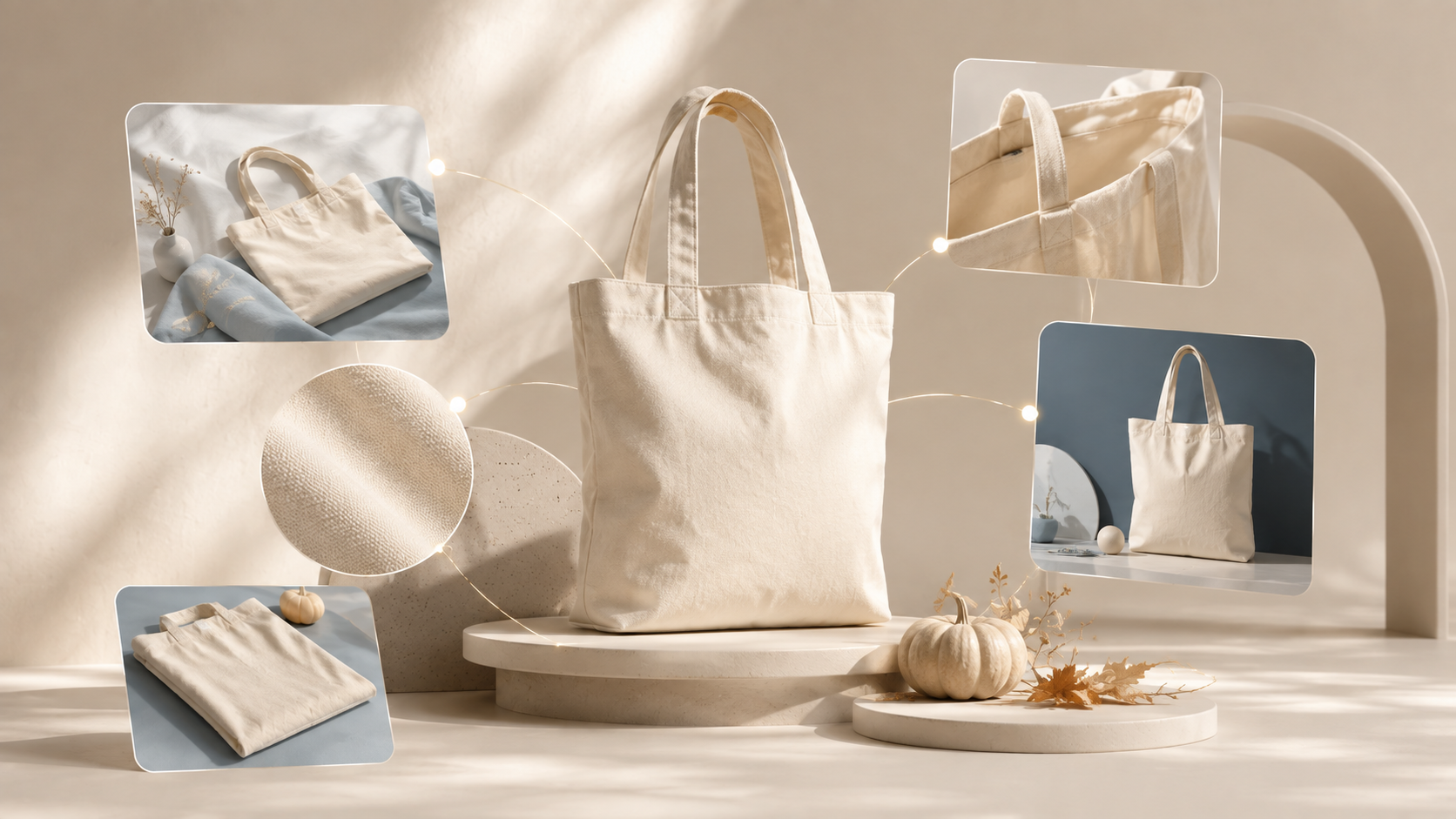
Instead of showing a hoodie against a white background, for example, show the hoodie as part of a carefully designed everyday setting. A mug can appear on a morning desk. A tote bag can be presented alongside books, a laptop, or travel essentials. The product becomes part of a lifestyle rather than an isolated object.
This type of visual is especially useful for products where emotion and identity influence purchasing decisions. Customers are often asking themselves, “Does this feel like me?” A strong lifestyle image helps answer that question without saying a word.
2. Before & After Visuals
Before-and-after visuals are particularly effective when your product changes, improves, organizes, or transforms something.
The comparison does not always need to show a dramatic physical transformation. For ecommerce brands, it could demonstrate how a messy desk looks after using a storage product, how a plain space changes with a decorative item, or how a blank garment becomes a distinctive piece through custom design.
The key is clarity. The customer should understand the difference within seconds. When used well, before-and-after imagery can turn an abstract product benefit into something immediately visible.
3. Product Usage Scenes
One of the most useful product image ideas is also one of the simplest: show the product being used.
A product displayed alone tells customers what they are buying. A usage scene tells them how it fits into their lives.
For example, a phone case can be shown in a realistic everyday setting, while a notebook can be presented on a desk alongside stationery. For creator merchandise, showing a character design across products can also help customers understand that the artwork is part of a broader collection.
Usage scenes reduce uncertainty because customers no longer have to imagine every detail themselves. The visual does that work for them.
4. Feature Highlight Images
Not every product benefit can be communicated through a beautiful lifestyle photograph. Sometimes customers need information.
Feature highlight images can bring attention to important details such as material, size, texture, functionality, product construction, or unique design elements. Instead of forcing shoppers to search through a long description, the image can communicate the most important information at a glance.
This is particularly valuable on marketplaces where customers compare several products quickly. A clean visual hierarchy can help your product communicate its strongest selling points before the shopper moves on.
The goal is not to fill an image with text. It is to make the most important product information visually obvious.
5. Seasonal Campaign Images
Products do not exist outside of time. Holidays, seasons, cultural moments, and major shopping periods can change what customers are looking for.
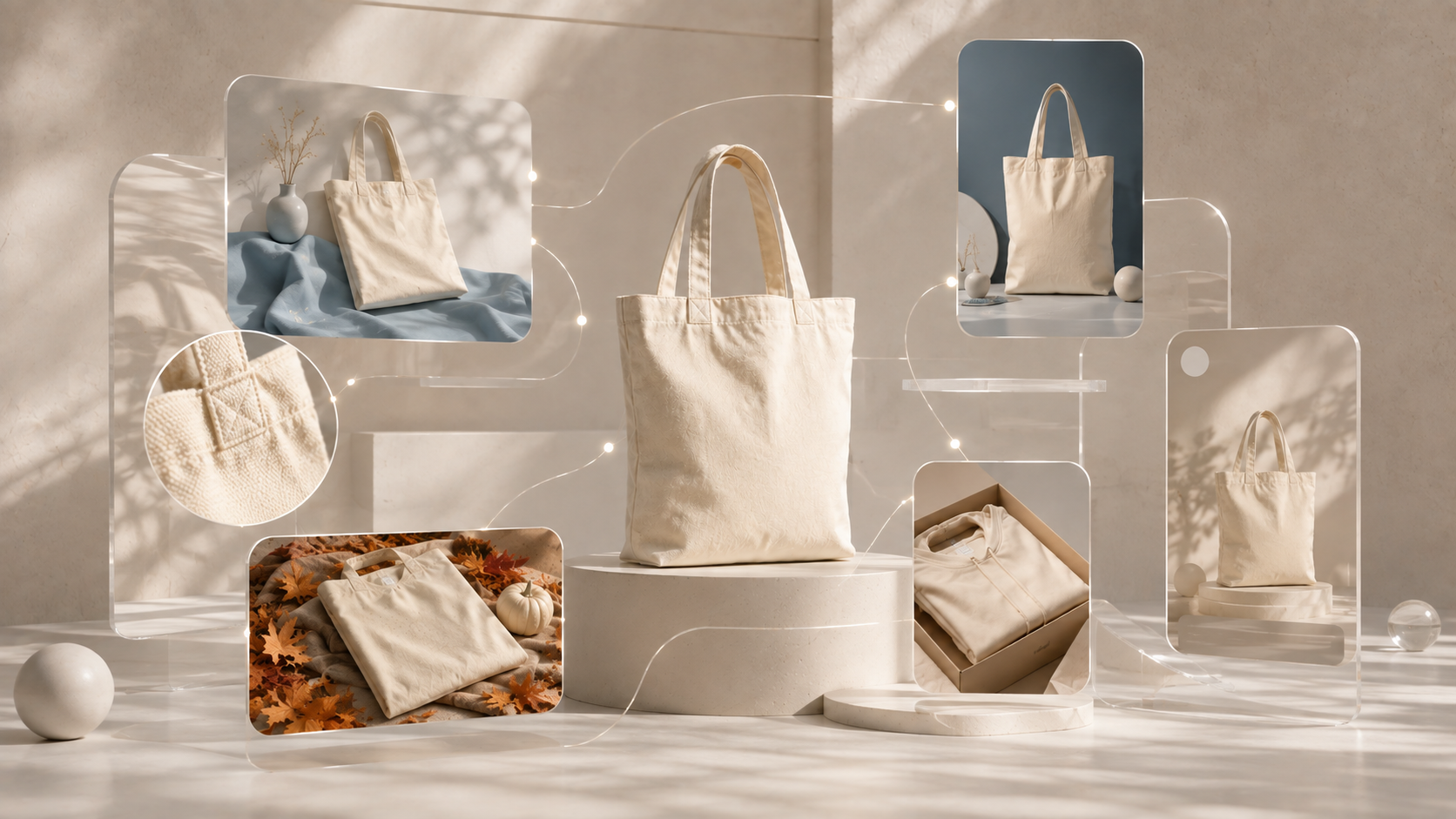
A basic product image may work throughout the year, but seasonal visuals can make the same product feel more relevant at a specific moment. A mug can become part of a cozy winter setting. A tote bag can be presented in a summer travel scene. A creator's character merchandise can be adapted into a limited seasonal collection.
Seasonal content is also one of the more flexible ecommerce marketing ideas because it allows sellers to refresh existing products without completely redesigning their catalog.
6. Social Media Product Content
Your product page is not the only place where customers discover products. Social media often creates the first interaction.
That means ecommerce visuals should be designed with sharing in mind. A product image used on Instagram, TikTok, Pinterest, or another platform should communicate the idea quickly enough to work while someone is scrolling.
This does not mean every social post needs to look like an advertisement. Behind-the-scenes visuals, product variations, creative concepts, collection previews, and short-form product demonstrations can make commercial content feel more native to the platform.
For creators especially, the boundary between content and commerce is becoming smaller. A piece of content can introduce the idea, while the product gives the audience a way to engage with it further.
7. Customer-Focused Visuals
Great ecommerce visuals should not only show what the seller wants to say. They should answer what the customer wants to know.
Think about the questions that appear before a purchase: How big is it? What does it look like in real life? How would I use it? Would it make a good gift? Does the design match my style?
Customer-focused visuals can address these questions directly through scale references, different angles, close-up details, gift-oriented scenes, or product combinations.
This is where ecommerce conversion tips become closely connected with visual communication. The purpose of a product image is not simply to make the store look attractive. It should reduce uncertainty and make the buying decision easier.
8. Brand Story Images
The strongest ecommerce brands eventually move beyond selling individual products. They build a recognizable visual world.
Brand story images can communicate the ideas, personality, characters, or creative identity behind a collection. For an artist, that might mean showing the inspiration behind an illustration. For a creator, it could mean introducing a character or visual identity that appears across different products.
This matters because customers do not always buy products purely for their function. They can also buy because they connect with the story behind them.
A consistent visual story can turn separate products into a collection—and a collection into a brand.
How to Create Better Ecommerce Visuals Faster
The challenge is that creating all these visuals manually can quickly become time-consuming. A seller may need product mockups, lifestyle scenes, feature images, seasonal content, social media assets, and product listings for every new design.
This is where tools such as Genki can simplify the workflow.
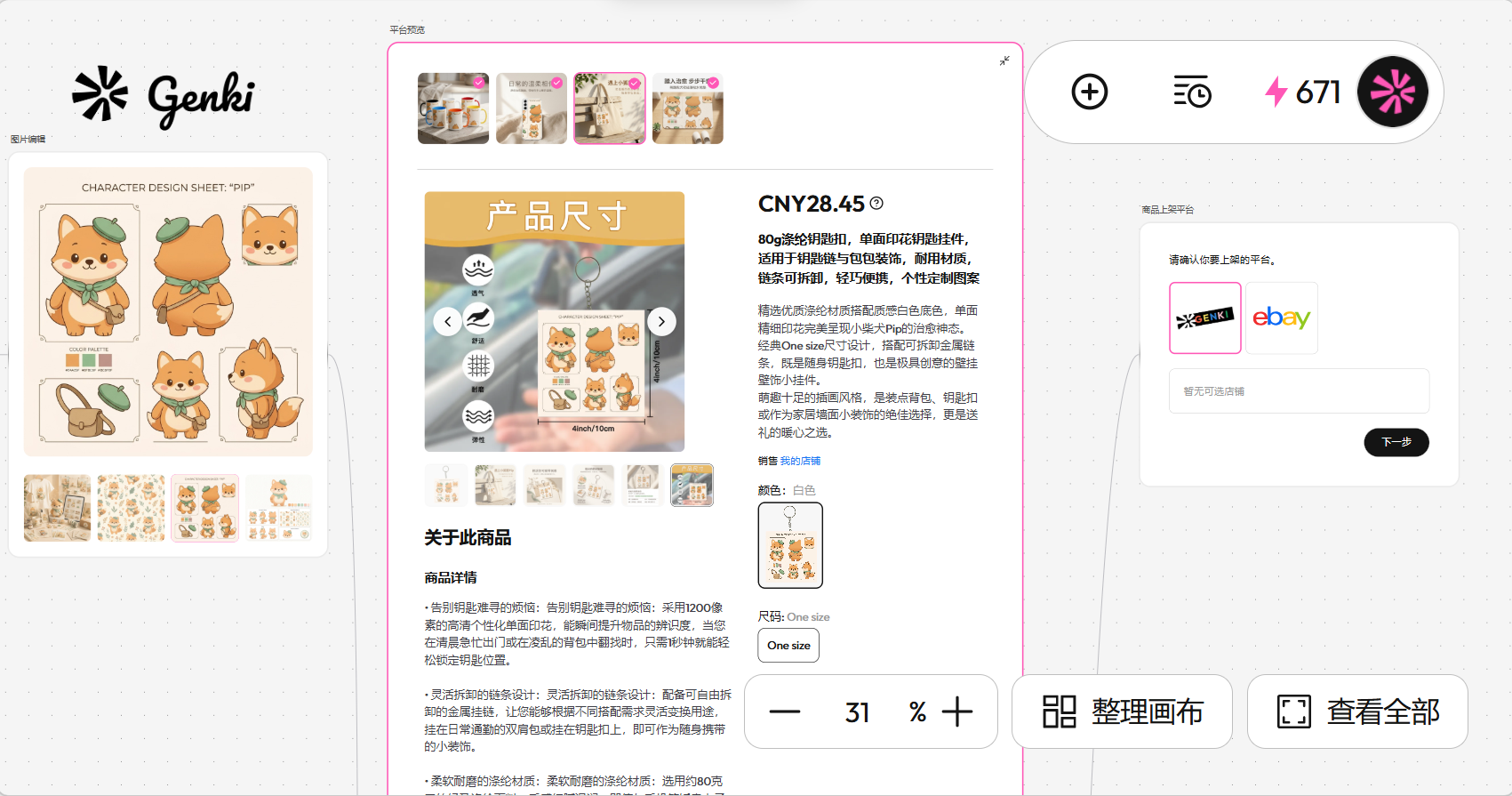
Genki is built to help creators, ecommerce sellers, and brands move from creative ideas to sellable products. Users can upload an image or describe an idea, generate product designs and visual assets, apply designs across product templates, and create product information such as titles, tags, and descriptions. The platform is designed to connect product creation with publishing and commerce rather than treating the product image as an isolated task.
That can be particularly useful when you need to test multiple visual directions quickly. Instead of manually creating every product mockup from scratch, you can develop a visual concept and explore how it works across different products and marketing contexts.
The important part, however, is still the creative decision behind the image. Technology can help produce more variations, but sellers still need to decide which visual communicates their product best and which one fits their audience.
Why Better Visuals Matter for Ecommerce Conversion
A product image has a short window to communicate value. If it is unclear, generic, or disconnected from the customer's needs, even a good product can struggle to earn attention.
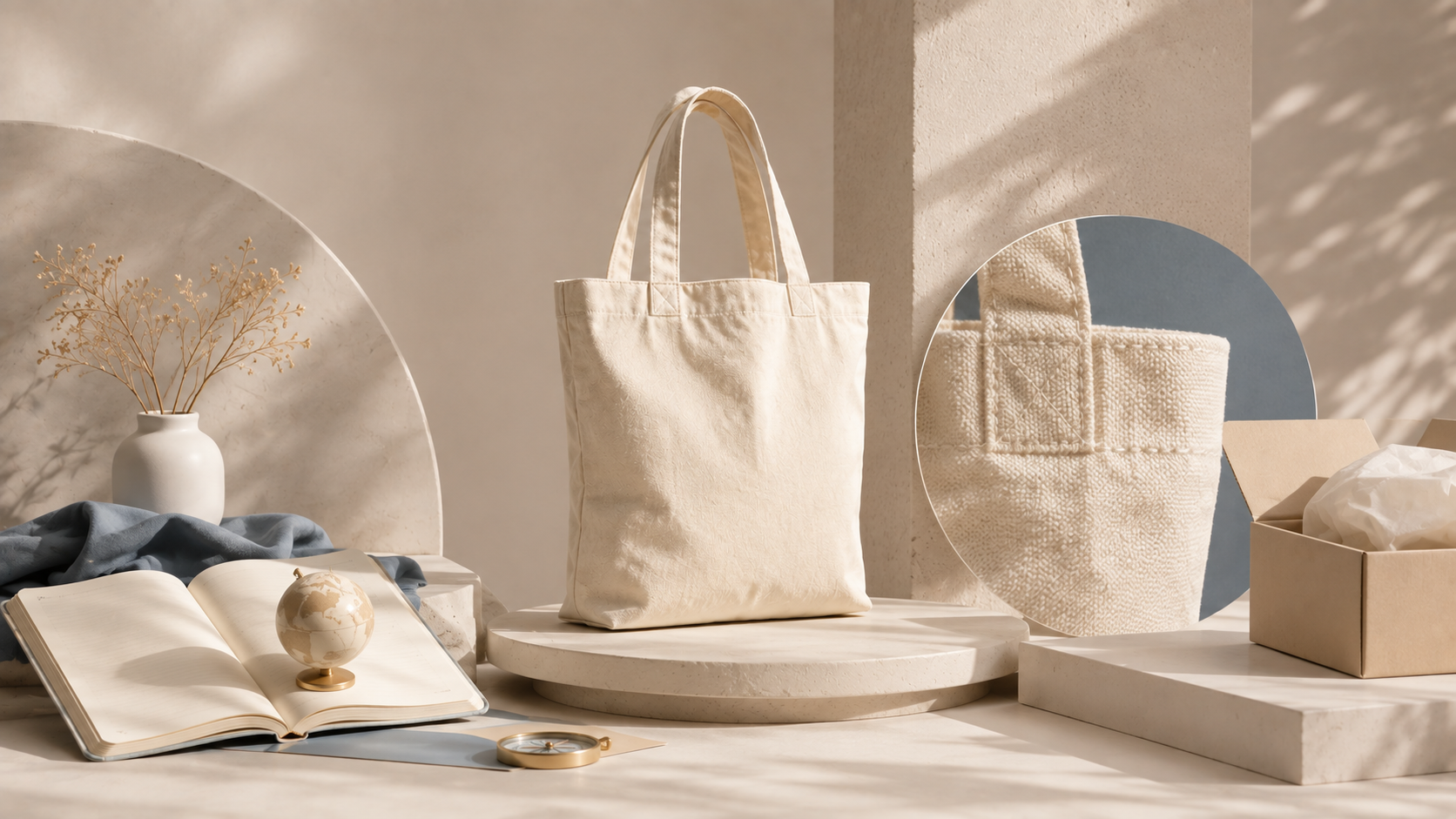
The strongest ecommerce visuals work together. A primary product image establishes what the product is. A lifestyle scene creates context. A feature image explains value. Social content creates discovery. Brand visuals build recognition.
Together, these images create a visual journey from “What is this?” to “I can see myself using this” and eventually “I want this.”
That is why improving your visual strategy can be more valuable than simply adding more images. Every image should have a purpose.
Create Engaging Ecommerce Visuals With a Smarter Workflow
You do not need to choose between beautiful design and efficient production. The goal is to build a workflow where you can create enough visual variety without losing your brand identity.
For creators and ecommerce sellers, that could mean turning one original design into a complete visual system: product images, lifestyle scenes, promotional content, and a consistent product collection. Genki helps connect those steps by bringing AI-assisted creation, product design, listing generation, and ecommerce publishing into one workflow.
The best ecommerce marketing ideas are not always the most complicated ones. Sometimes, they start with a better way to show what you already sell.

Turn Better Visuals Into More Clicks
Great products deserve visuals that get noticed. With Genki, you can create engaging ecommerce visuals faster and turn your product ideas into content that’s ready to share and sell. Create with Genki now!